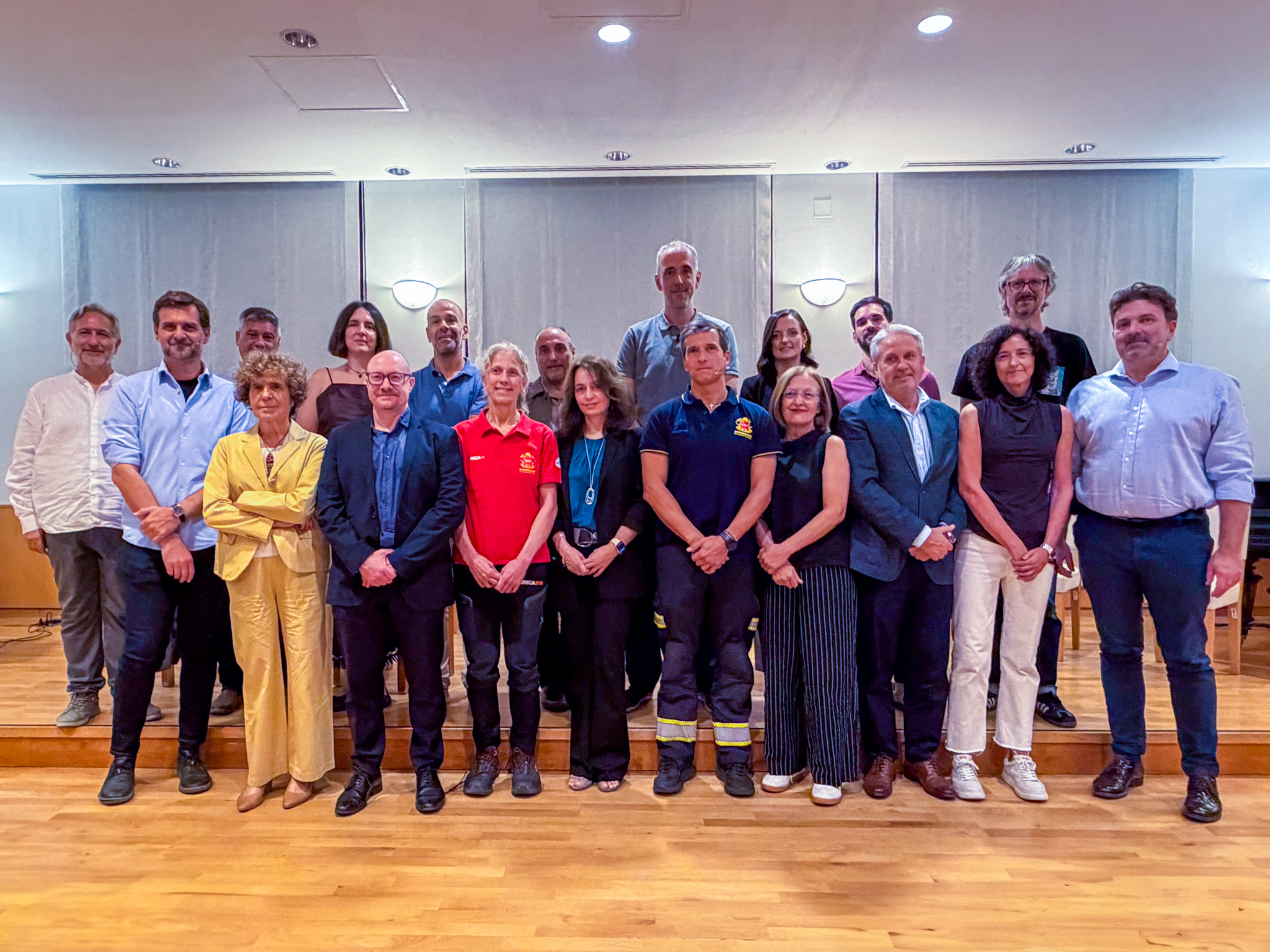
On Friday, September 25, we had our annual date with science at the European Researchers’ Night event, an outreach gathering that puts the spotlight on the vital role played by people who dedicate their lives to research.
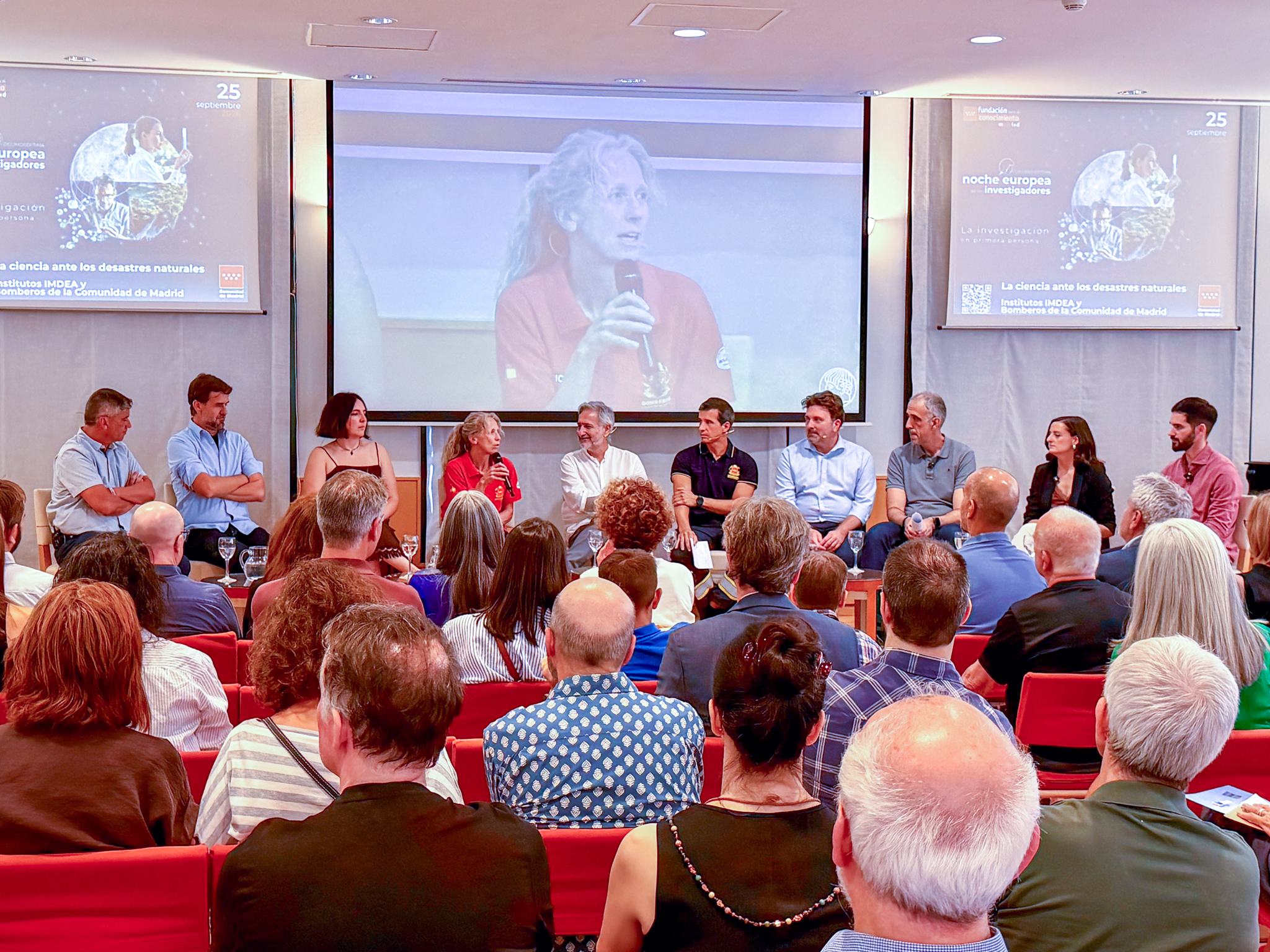
For this seventeenth edition, we met at the Residencia de Estudiantes in Madrid to discuss, alongside the other IMDEA institutes and the Community of Madrid Fire Department, the ways in which science can help combat natural disasters. For the second consecutive year, the panel was moderated by Antonio Fernández Anta, Deputy Director of IMDEA Software.
Representing our institute was Jose Aguilar, a senior researcher who recently joined the team. Jose is part of the technical team for the European project UrbanSwarm, an initiative aimed at transforming underutilized urban spaces into circular and resilient environments. In this project, they work directly with the management of natural disasters linked to the climate crisis, especially those caused by extreme weather events and flash floods.
During the event, following the intervention of Annika Coll, head of ERICAM (Emergency and Rapid Response Team of the Community of Madrid), Jose was asked about the role of software in flood events like the DANA experienced in 2024 in Valencia:
“The European project we are working on allows us, on the one hand, to map flood-affected areas to design an effective rescue strategy. On the other hand, it enables long-term planning for the development of these locations to prevent disasters like those that struck the peninsula two years ago.”
Thanks to satellite imagery of the terrain, the UrbanSwarm team can characterize areas, build 3D models, and identify land use, vegetation types, topography, and humidity levels, among other factors. With this powerful tool, they are able to assess risks, such as the volume of water accumulated in a ravine after heavy rainfall, and act to identify safe access and evacuation routes.
These events highlight the importance of interdisciplinary collaboration among scientific fields when tackling modern challenges, while bringing researchers and the general public closer together.