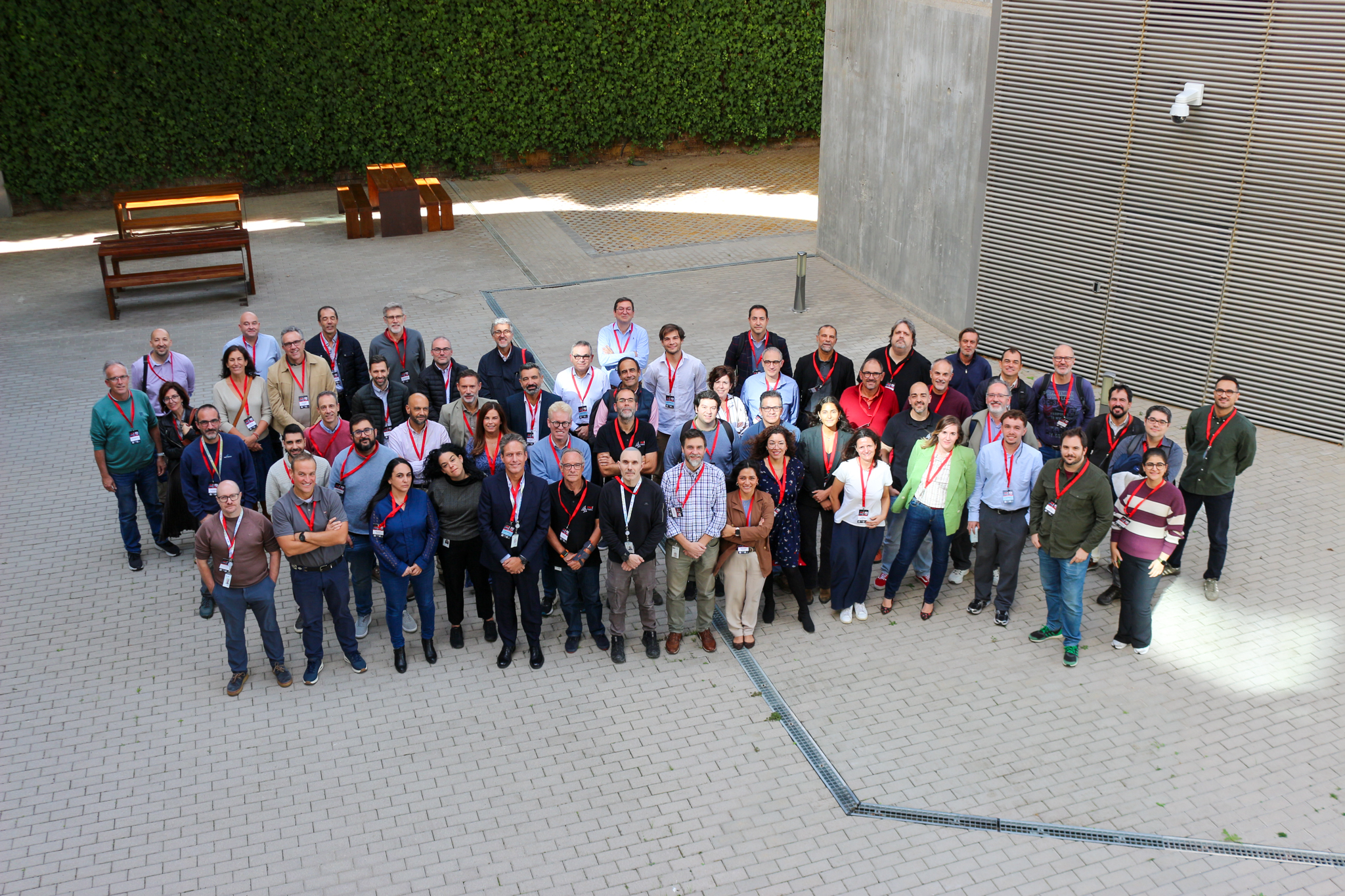
The IMDEA Software Institute was once again the meeting point for Madrid’s scientific and technological community on October 22nd with the celebration of the XXI REDIMadrid Conference. The event, attended by a total of 90 people (75 in person and 15 remotely), consolidated the academic network as a rapidly growing community. The space also served to address current challenges in areas such as infrastructure and technological sovereignty.
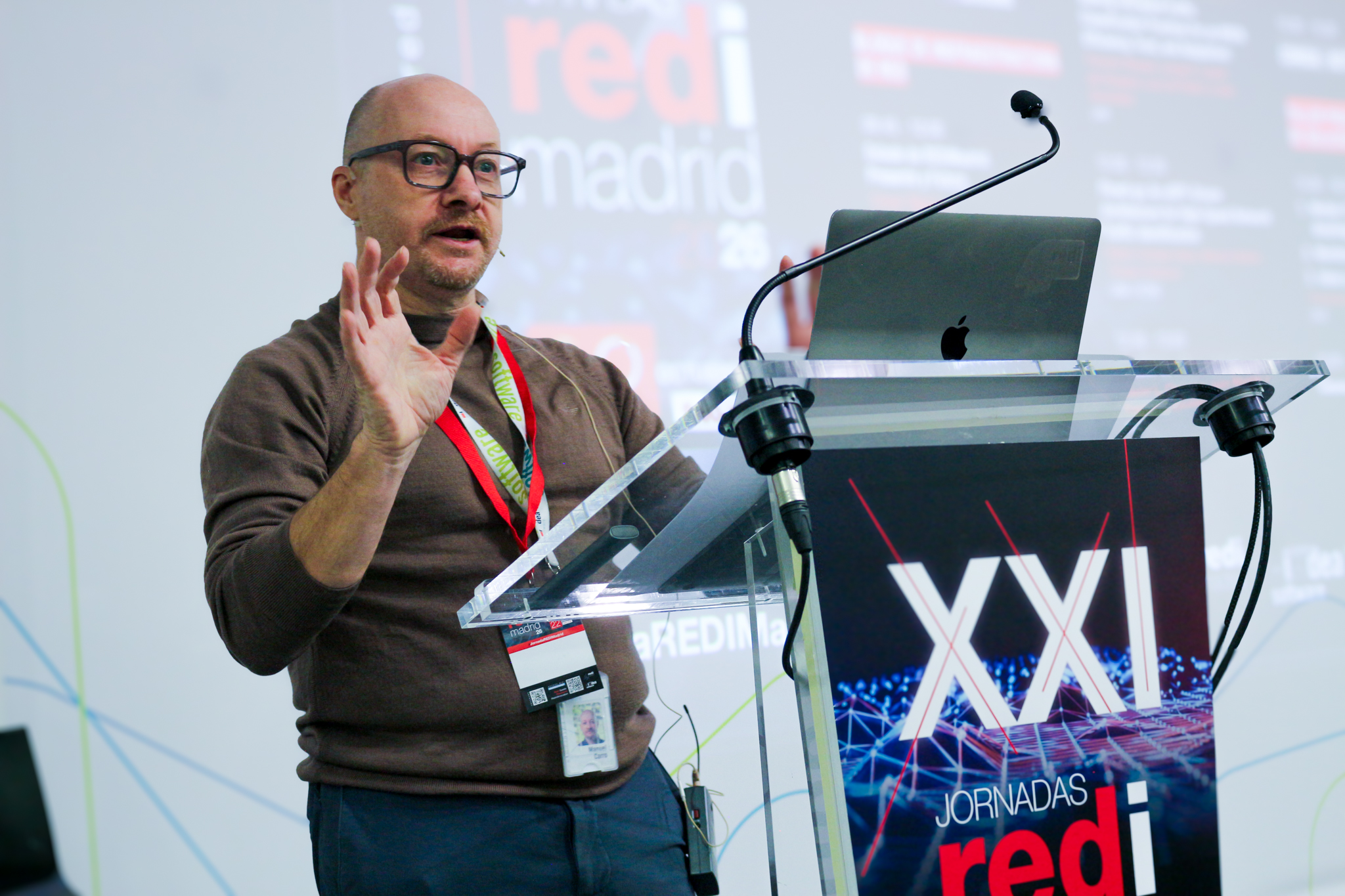
The opening address was delivered by the center’s director, Manuel Carro, who highlighted the completion of the madquantum-CM project, a key milestone in laying the foundations for quantum communications in the region and connecting university secondary nodes. Manuel also brought up the flip side of artificial intelligence: a powerful tool for network supervision and security, but one that also opens the door to automated attacks and the risk of vendor lock-in with major AI operators.
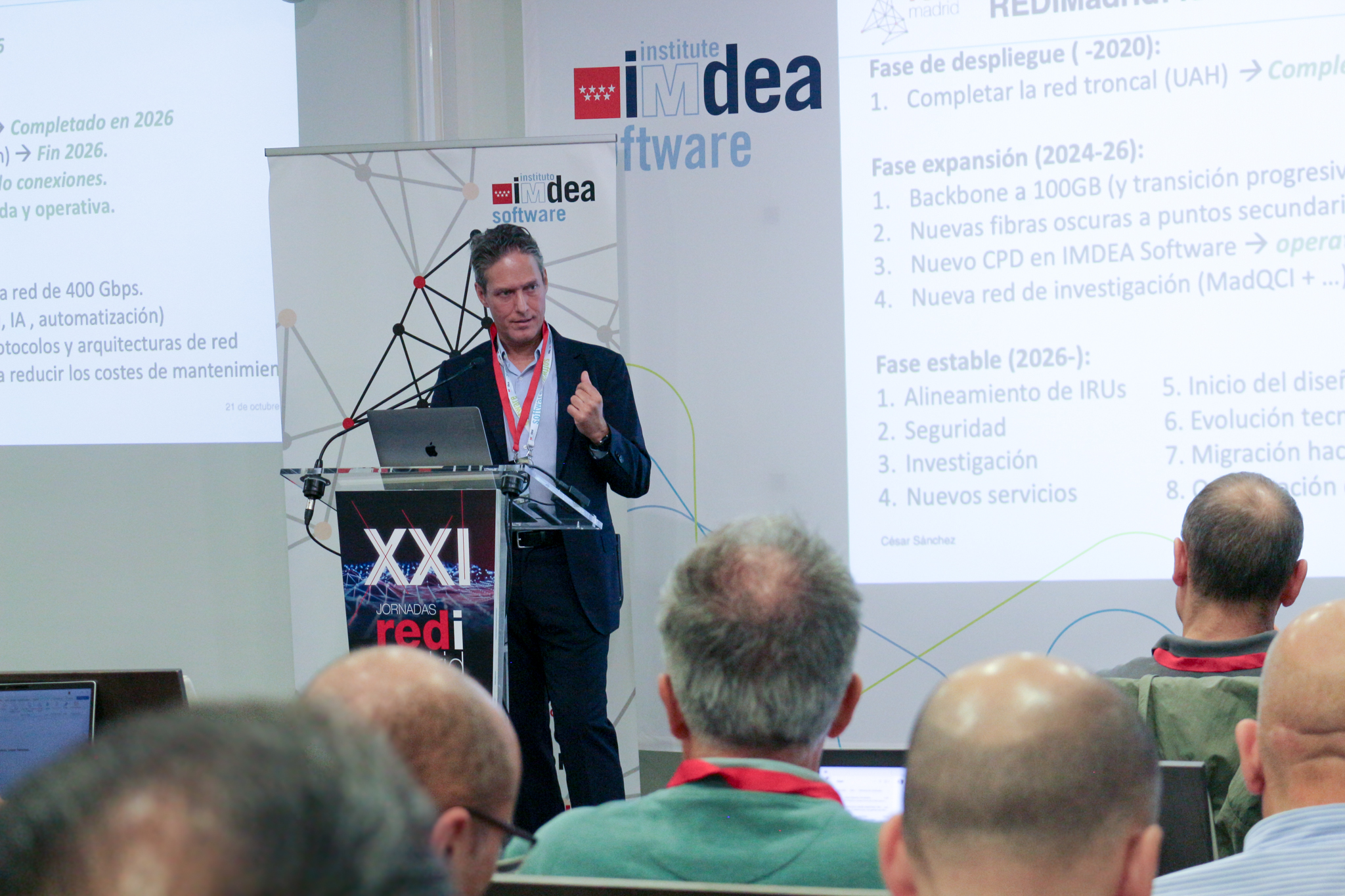
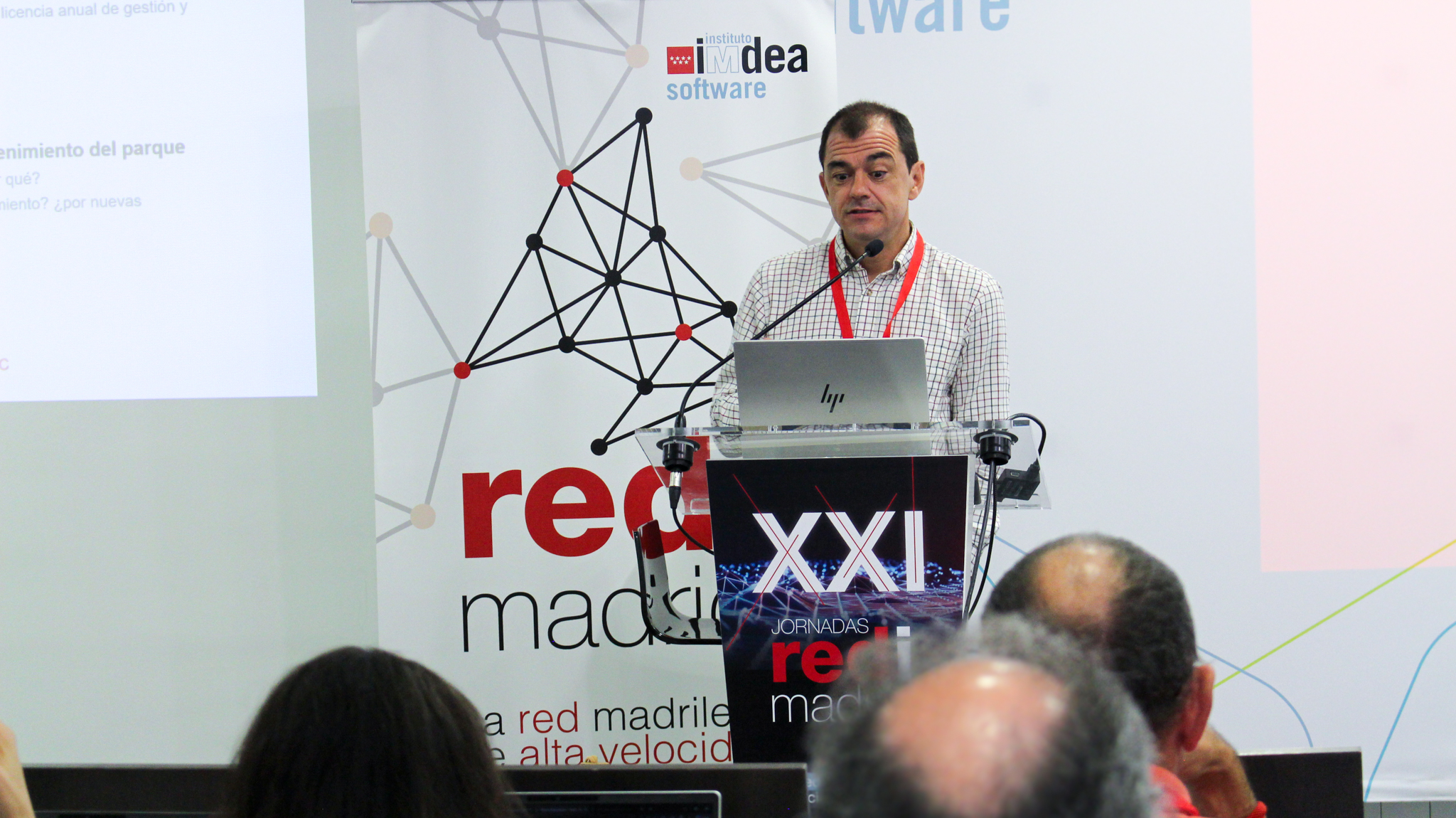
For his part, the director of REDIMadrid, César Sánchez, confirmed that the physical fiber deployment phase in university secondary nodes and the new ring connecting UAM and UAH are now complete, which will eliminate the need to lease capacity from third parties. The network is now entering a planning phase aimed at migrating to 400G capacities, aligning IRU contracts, and committing to long-distance optics that simplify multiplexing and lower maintenance costs.
The first block of presentations demonstrated that universities do not only consume technology, but also develop it to gain independence.
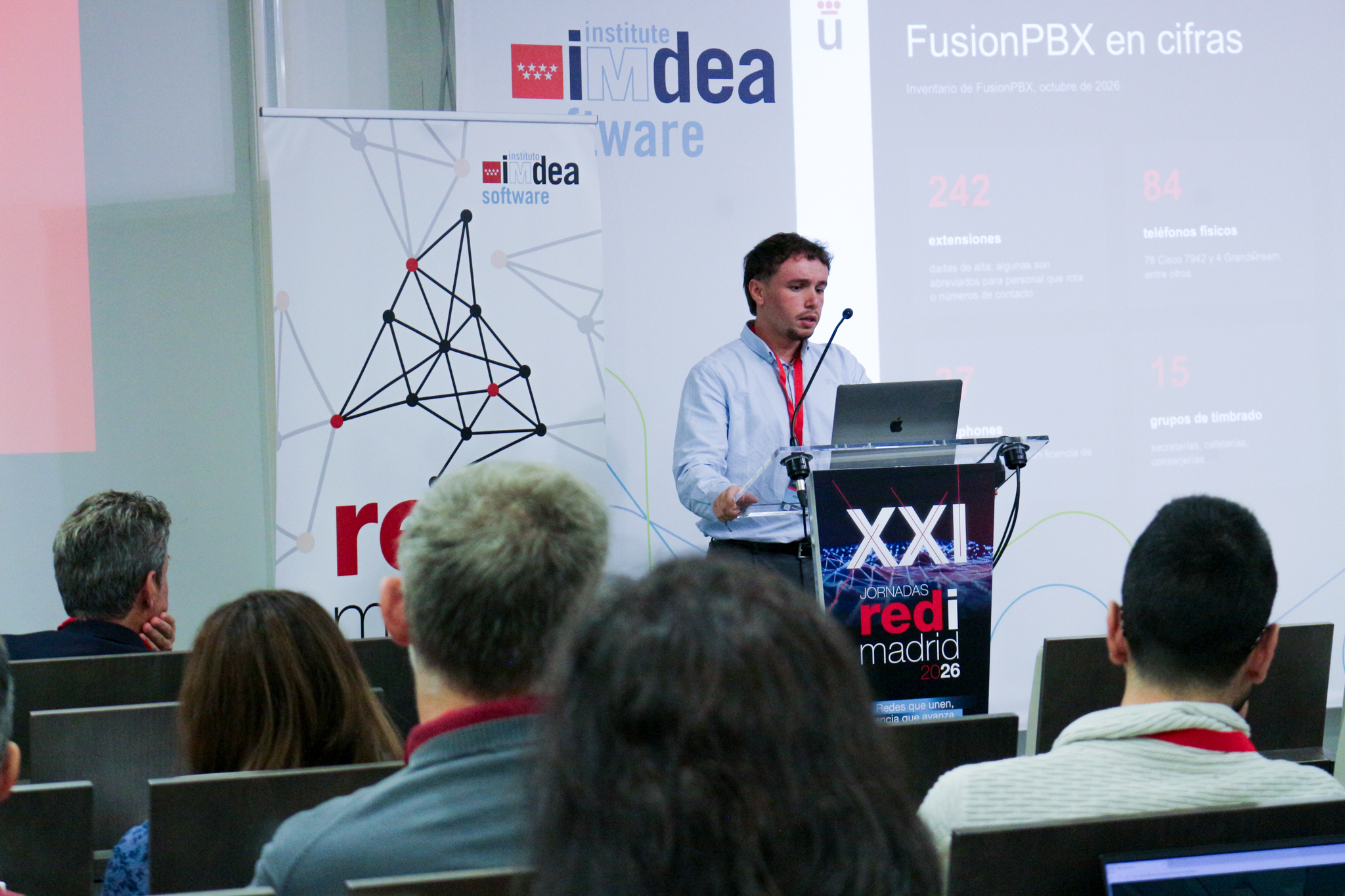
From the Universidad Rey Juan Carlos (URJC), Fran Sánchez and Juan Montes presented how they migrated their traditional telephony system to an in-house platform combining Teams Phone and FusionPBX. By maintaining control over the hardware and using open-source software, they managed to reuse 93% of their existing Cisco phones using specific SIP firmware, avoiding dependency on external vendors and resolving incidents with in-house agility.
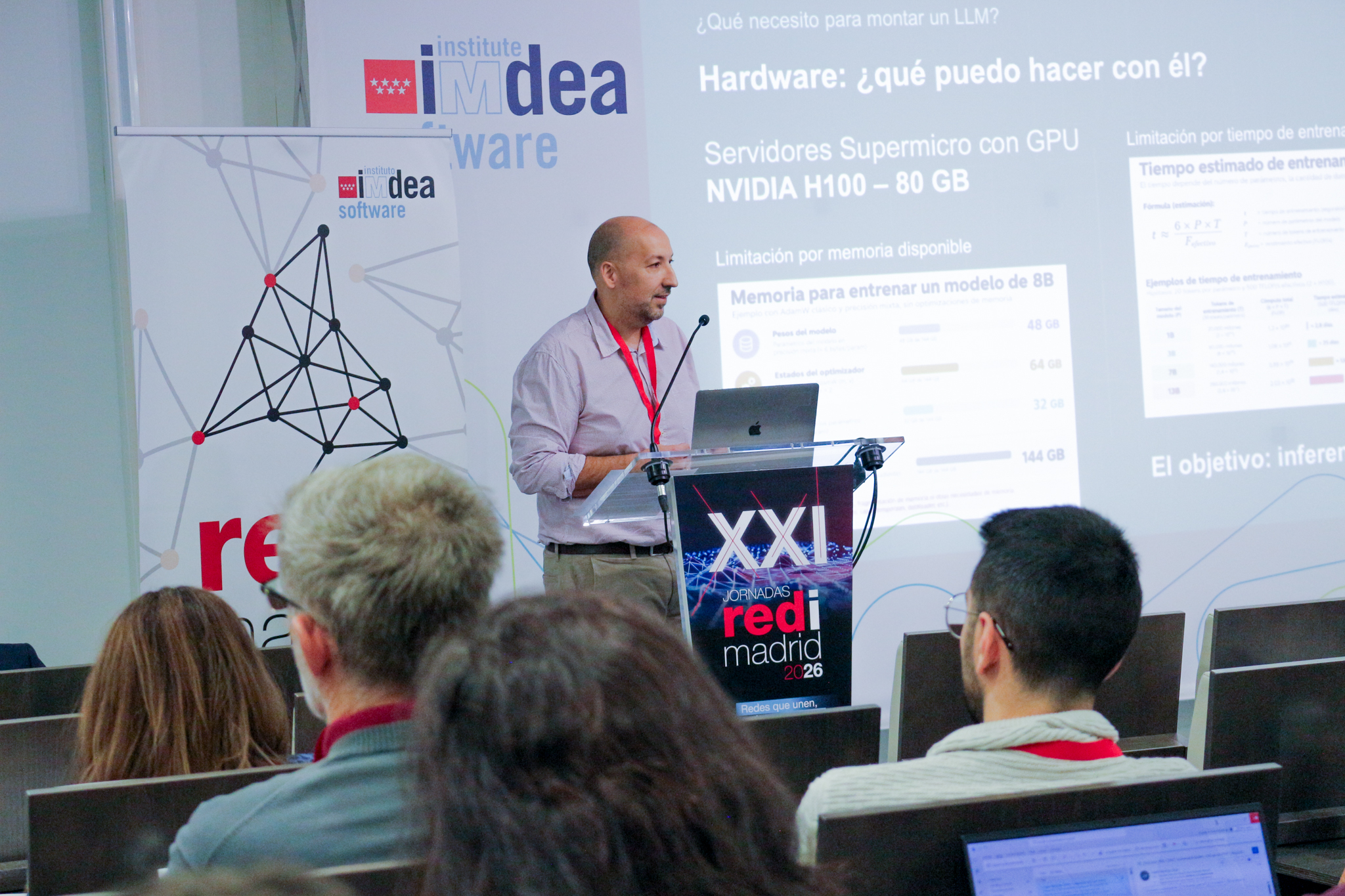
Along the same lines, José María Cruz Lorite, from the Universidad Nacional de Educación a Distancia (UNED), explained the ins and outs of setting up an on-premise generative AI platform. He demonstrated how accessible it is to deploy a local LLM with Docker and Ollama, optimize queries with vLLM to prevent bottlenecks, and connect the AI to tools such as an MCP developed in just a few hours to analyze firewall logs and accelerate security diagnostics.
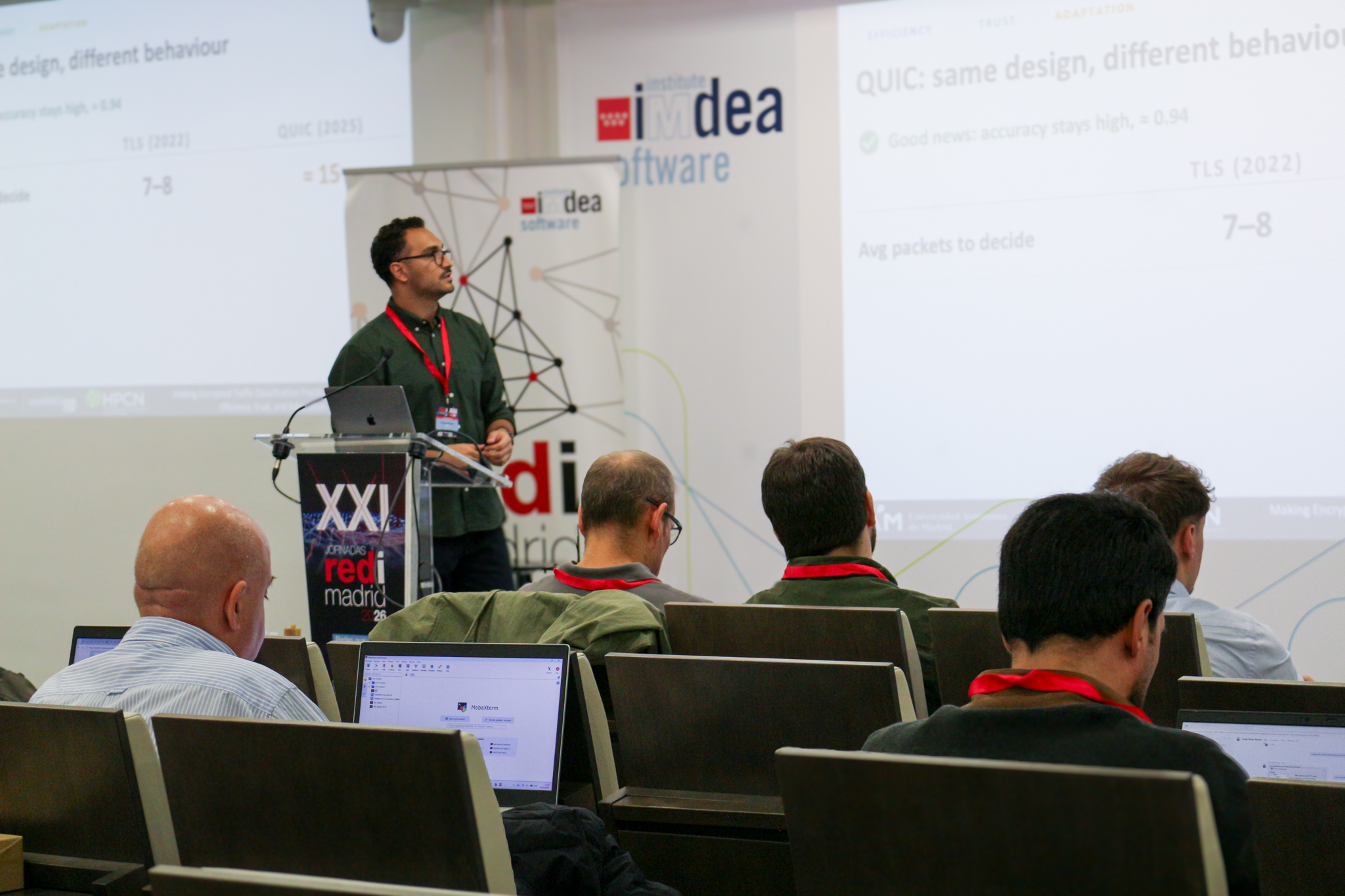
The morning continued with a deeper dive into large-scale traffic analysis. Farzam Rezaei, from the Universidad Autónoma de Madrid (UAM), presented a system for classifying TLS-encrypted traffic by analyzing only the metadata of the initial packets with 96% accuracy, allowing security and quality-of-service policies to be applied without exposing packet contents.
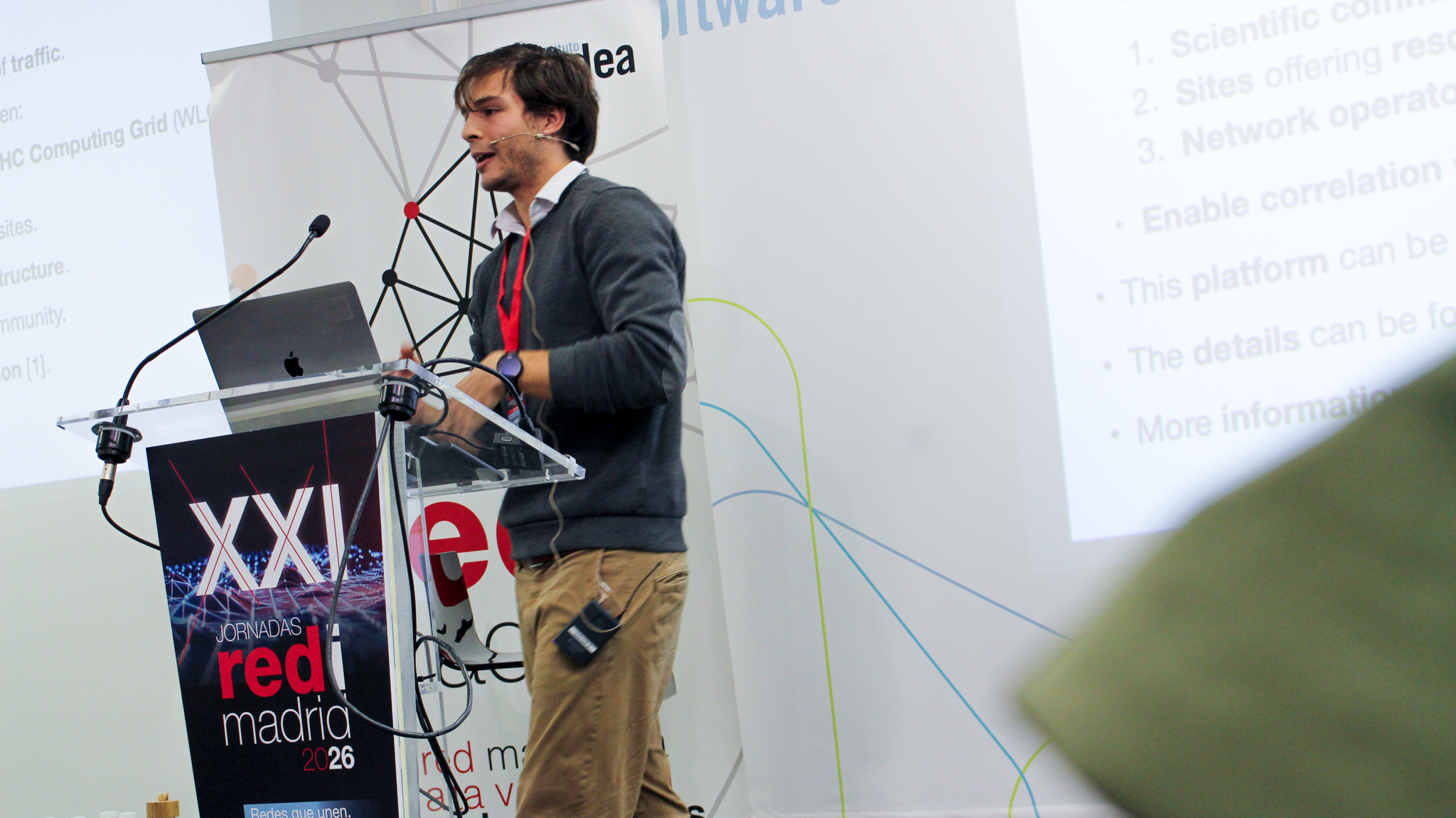
On his end, Pablo Collado Soto (UAM-LHCONE) addressed how to manage the colossal volumes of data generated by High Energy Physics experiments. Through the eBPF-driven Flowd-go architecture and the SciTags initiative, they aim to label and route traffic intelligently to decongest critical links based on the latency requirements of each project.
In the afternoon, URJC took the floor again with Francisco Escalero, who presented SCOMP, a wireless network orchestrator based on Docker microservices that works with any Access Point with SSH access via Jinja2 templates. The key: using AI to automatically generate and test configurations for different brands in a matter of hours, breaking away from traditional manufacturers’ expensive licensing models.
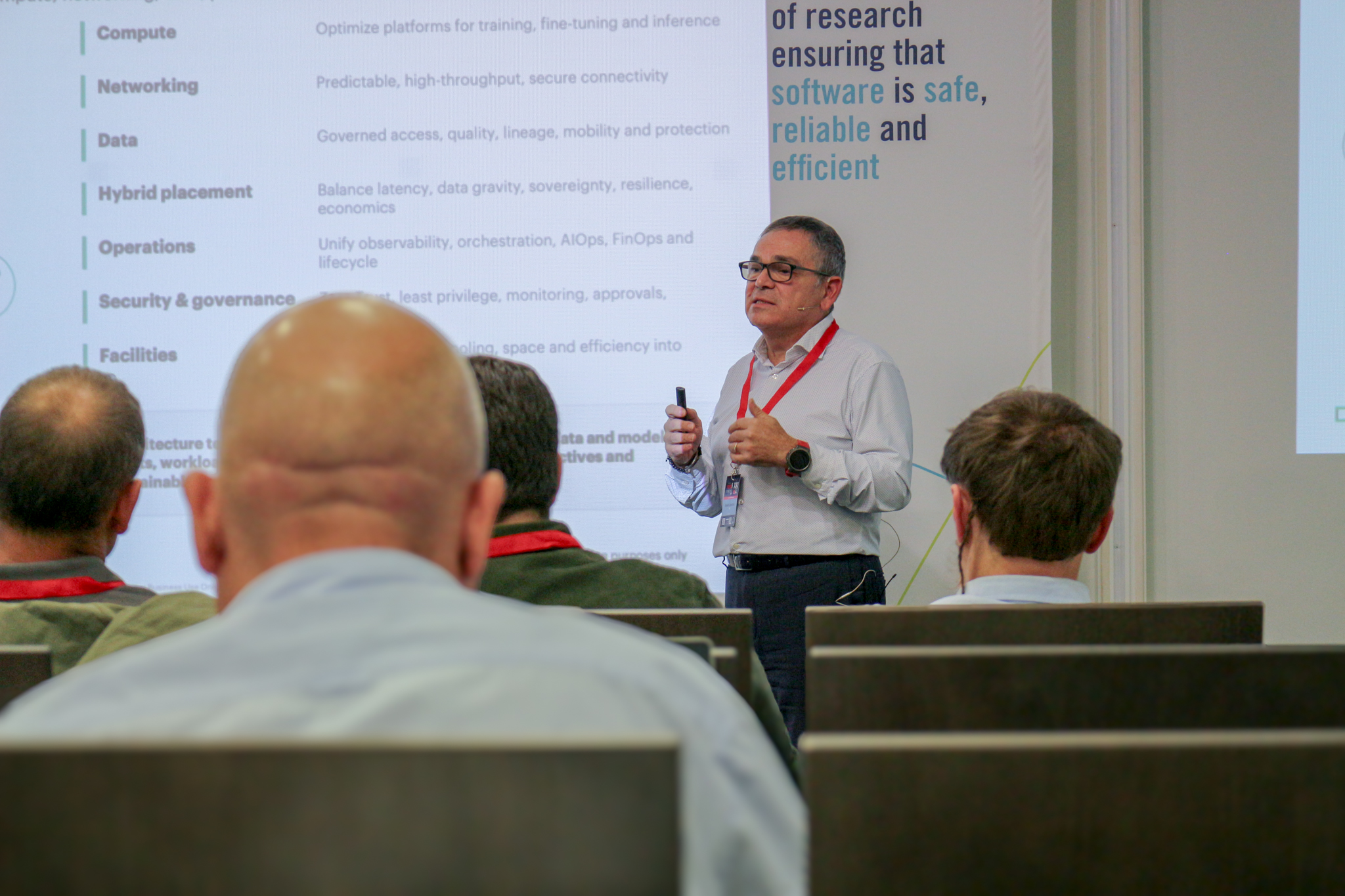
The presentation block concluded with Davide Bianchini (HPE), sponsors of the event, who offered an overview of the evolution toward physical AI and data centers equipped to handle massive AI workloads using liquid cooling, 1.6 Tb/s switches, and automation powered by the Apstra multi-vendor platform and the Marvis assistant.
The day wrapped up with a hands-on workshop led by Francisco Escalero on deploying EduVPN, bringing to a close an event that proves REDIMadrid remains at the forefront of emerging technologies.